
TOP ATTRACTIONS
The High Line NYC: Complete Visitor Guide (Free, Hours, and What to See)
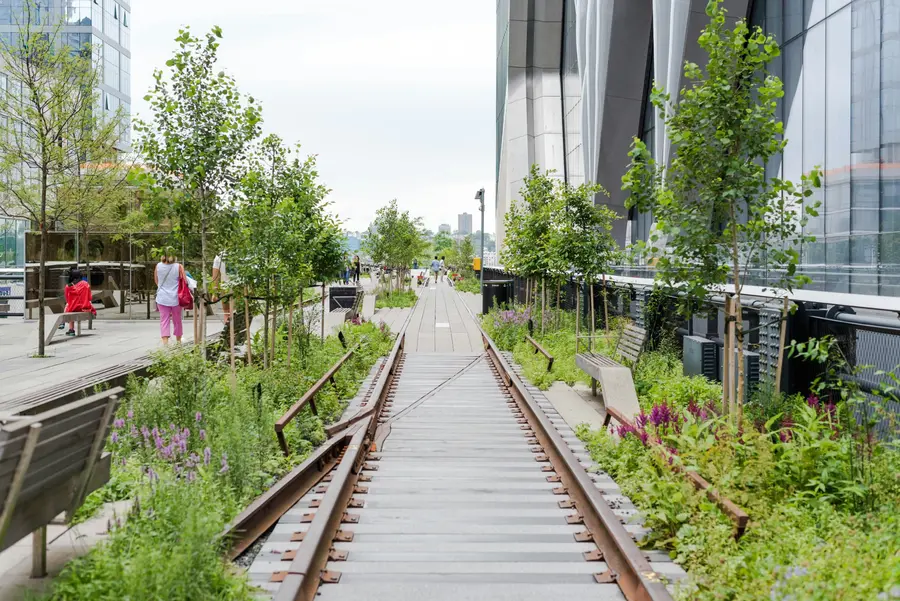
Thirty feet above Tenth Avenue, where freight trains once rattled through the night delivering meat and produce to the industrial West Side, there is now a garden. Wild grasses sway in the river breeze. Art installations appear around every bend. And on a clear evening, the Hudson River turns gold behind the New Jersey skyline. The High Line is not what you expect from a park — and that is exactly the point.
The High Line is a 1.45-mile elevated linear park built on a former New York Central Railroad freight spur on Manhattan’s West Side. It runs from Gansevoort Street in the Meatpacking District through Chelsea to 34th Street at Hudson Yards, sitting thirty feet above the streets the entire way. It draws nearly eight million visitors a year, holds the only dedicated contemporary art program of any park in New York City, and is completely free to enter. It also nearly got demolished.
The short answer
- The High Line is completely free — no tickets, no reservations, no entry fee.
- It runs 1.45 miles from Gansevoort Street (south) to 34th Street at Hudson Yards (north).
- Open daily: 7am–10pm April through November; 7am–8pm December through March.
- Eleven entrances along the route; five have elevators for wheelchair access.
- Over 500 plant species, world-class free contemporary art, and Hudson River views throughout.
- End-to-end walk: 30 minutes brisk, 60–90 minutes casual, 2+ hours with stops and food.
History: From Death Avenue to park in the sky
The railroad era (1800s–1980)
In the mid-1800s, freight trains operated by the New York Central Railroad ran at street level along 10th and 11th Avenues, delivering meat, dairy, and produce to the factories and warehouses of Manhattan’s industrial West Side. The trains were so dangerous that 10th Avenue earned a grim nickname: “Death Avenue.” By 1910, more than 540 people had been killed by street-level trains. The railroad hired men on horseback — the West Side Cowboys — to ride ahead waving red flags, but the deaths continued for decades.
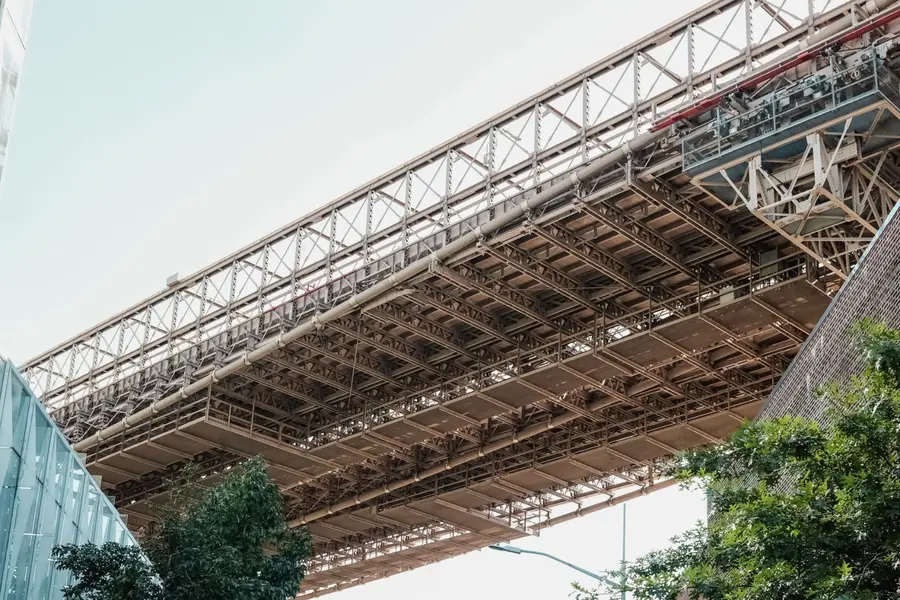
The solution was the West Side Improvement Project. The first train ran on the new elevated viaduct in 1933, and the structure was fully dedicated on June 29, 1934. Designed to run through the center of city blocks rather than over an avenue, the line connected directly to factories and warehouses — including the National Biscuit Company building at 15th Street, which today houses Chelsea Market. Milk, meat, and produce moved through the city without ever touching the streets below.
Decline and near demolition (1960s–1999)
The rise of interstate trucking in the 1950s steadily eroded rail freight traffic. By 1978, the High Line viaduct carried just two carloads of cargo per week. It shut down entirely in 1980. Through the 1980s and 90s, the rusting structure sat unused above the neighborhood — a hulking urban eyesore. Mayor Rudy Giuliani signed a demolition order in his final days in office. The High Line seemed finished.
But something unexpected had happened in those years of abandonment. Wild plants — grasses, sumac, wildflowers — had quietly colonized the gravel tracks. In 1999, CSX Transportation (then owner of the viaduct) gave photographer Joel Sternfeld permission to document this hidden landscape for a year. His photographs of the overgrown, hauntingly beautiful structure changed the conversation entirely.
Saved by the community (1999–2009)
In October 1999, two Chelsea neighbors — Joshua David and Robert Hammond — founded Friends of the High Line, a nonprofit dedicated to transforming the structure into public open space. With support from Mayor Michael Bloomberg, they held a design competition in 2003 that attracted 720 entries from 36 countries. The winning design team — James Corner Field Operations (project lead), Diller Scofidio + Renfro (architecture), and Dutch planting designer Piet Oudolf — was selected in 2004. Construction broke ground on April 10, 2006.
Opening phases
|
Phase |
Section |
Opened |
|---|---|---|
|
Phase 1 |
Gansevoort St to 20th St |
June 2009 |
|
Phase 2 |
20th St to 30th St |
June 2011 |
|
Phase 3 |
30th St to 34th St (Rail Yards) |
September 2014 |
|
The Spur |
10th Ave & 30th St extension |
June 2019 |
|
Moynihan Connector |
Spur east to Moynihan Train Hall |
June 2023 |
Where is the High Line?
The High Line runs entirely on Manhattan’s West Side, threading through three distinct neighborhoods. It starts at Gansevoort Street in the Meatpacking District — where the old freight line originally connected to slaughterhouses and packing plants — and travels north through Chelsea, the city’s densest gallery district, before concluding at 34th Street near Hudson Yards. The entire route sits roughly 30 feet above street level.
Along the way, the High Line passes under the iconic Standard Hotel at 13th Street, alongside the Whitney Museum of American Art at the southern end, through the west edge of Chelsea Market at 15th Street, and wraps around the Hudson Yards development at its northern end. The 2023 Moynihan Connector now extends the route east to Moynihan Train Hall at Penn Station — making it possible to arrive by train and step straight onto the park.
Is it free? Hours and admission
Yes — the High Line is completely free. There are no tickets, no reservations, and no entry fees for adults or children. The park is owned by the City of New York and operated by the nonprofit Friends of the High Line, which raises nearly 100% of the park’s annual budget through private donations. Your visit costs nothing. If you love it, a donation is always welcome but never required.
April 1 – November 30: 7am to 10pm daily
December 1 – March 31: 7am to 8pm daily
The park is open 365 days a year. Shake Shack at the Gansevoort entrance is open year-round; all other food vendors operate May through October only.
How to get there
The subway is by far the easiest way to reach the High Line. The park has 11 entrances along its 1.45-mile length — a mix of stair-only and elevator-accessible access points. Most visitors start at either the Gansevoort Street (southern) end or the 34th Street/Hudson Yards (northern) end.
By subway
|
Entrance |
Nearest subway stop |
Lines |
|---|---|---|
|
Gansevoort St (south end) |
14th St – 8th Ave |
A, C, E |
|
14th St & 10th Ave |
14th St – 8th Ave |
A, C, E |
|
23rd St & 10th Ave |
23rd St |
C, E |
|
30th St / Hudson Yards (north end) |
34th St – Hudson Yards |
7 |
|
Moynihan Connector |
34th St – Penn Station |
A, C, E / 1, 2, 3 |
Elevators and accessibility
The entire High Line is wheelchair accessible. Elevators are located at Gansevoort Street & Washington St, 14th Street & 10th Ave, 23rd Street & 10th Ave, 30th Street & 10th Ave, and 31st Street & Dyer Ave (Moynihan Connector). Always check the official elevator status page before visiting if you have mobility concerns. Wheelchairs can also be borrowed in advance by completing a request form on the official High Line website, a service sponsored by Guardian.
What to see: sections and highlights
The High Line is not a straight walkway — it is a sequence of distinct spaces, each with its own character. Walk the full 1.45 miles and you will pass through more than fifteen different garden zones, multiple art installations, a sunbathing deck, an amphitheater, and a dedicated monumental art commission space. Here are the highlights worth seeking out.
Gansevoort Woodland
At the southernmost tip of the park, a shaded grove of gray birch and serviceberry trees creates an immediate contrast with the busy Meatpacking District below. The nearby Tiffany & Co. Foundation Overlook offers your first unobstructed views west toward the Hudson River — a taste of what the entire park will deliver.
14th Street Sundeck and Water Feature
At 14th Street, the park splits into two levels. The upper level offers a sunny sundeck with views over the Standard Hotel straddling the park below, while the lower level features the Diller–von Furstenberg Water Feature, where wetland gardens flourish around a gentle water element. On warm days, people simply sit here and watch the city.
Tenth Avenue Square (17th Street)
At 17th Street where the park crosses over Tenth Avenue, a stepped amphitheater with a glass-fronted overlook frames the street traffic below like a living theater. The Tenth Avenue Square is one of the most photographed spots on the High Line — and rightly so. The view through the glass, looking down at the avenue rushing below while you stand perfectly still above it, captures the High Line’s whole premise in a single frame.
The Lawn at 23rd Street and the Flyover
Around 23rd Street, the viaduct widens into the park’s only grass lawn — an open, flat space ideal for lying down or reading, and popular enough on sunny weekends to get crowded. A few blocks north, between 25th and 26th Streets, a ramp lifts you 8 feet above the planting beds — the Falcone Flyover — giving you the closest possible view of Piet Oudolf’s naturalistic plantings, with wildflower meadows stretching below you on both sides.
The Spur and the Plinth (30th Street)
The park’s newest major section, opened in June 2019, includes the Coach Passage — a soaring 60-foot-high corridor — the High Line’s largest planted garden, and the Plinth at 10th Avenue and 30th Street. The Plinth is the only space on the High Line — and one of the only spaces in New York City — dedicated solely to a rotating series of monumental contemporary art commissions. The sculpture changes every 18 months.
Art on the High Line
The High Line is the only park in New York City with a dedicated multimedia contemporary art program — and every piece is free to see, 365 days a year. Led by curator Cecilia Alemani, High Line Art commissions and presents works by national and international artists at all career stages. You will encounter art in several forms: temporary commissions — sculptures, murals, and installations along the park; the Channel at 14th Street, which screens rotating video art; performances throughout the year; and the flagship Plinth at 30th Street for large-scale monumental commissions.
The High Line gardens
What makes the High Line’s gardens remarkable is that they were designed to look like what the structure already was — a wild, self-seeded landscape that had grown undisturbed for 25 years while the tracks sat abandoned. Dutch planting designer Piet Oudolf, who shaped the gardens, has said: “My biggest inspiration is nature. I do not want to copy it, but to recreate the emotion.” The plantings across more than 15 distinct zones include over 500 species — perennials, grasses, shrubs, and trees selected for hardiness, seasonal interest, and the ability to thrive in the exposed, elevated conditions of the viaduct.
The High Line is home to approximately 150,000 individual plants. In spring, crab apple trees and early bulbs bloom; in summer, wild grasses sway in the river breeze; in fall, sedums and asters take on amber hues; and in winter, the dried stalks and seedheads are left standing — not cut back — providing both beauty and habitat for birds. A team of 10 horticulturists maintains the gardens year-round, with hundreds of volunteers joining each March for the annual Spring Cutback. The park documents 33 native bee species, migratory warblers, and butterflies including painted ladies — one of the most significant ecological corridors in urban Manhattan.
Things to do and events
Free docent-led tours
Friends of the High Line runs free guided tours led by trained docents. Tours operate on Tuesdays, Wednesdays, Thursdays, and Saturdays from May through August; Tuesdays, Wednesdays, and Saturdays in September and October; and Wednesdays and Saturdays from November through April. No booking is required. Simply show up at the meeting point listed on the official events calendar.
Events, programs, and the Bloomberg Connects app
The High Line’s year-round calendar includes yoga classes, stargazing nights (Tuesdays at dusk, April through October), dance performances, family art workshops, and wellness programs. Most events are free; some require advance RSVP. For solo visits, download the free Bloomberg Connects app — it provides GPS-enabled audio tours, behind-the-scenes content about the art and gardens, and insider information most visitors walking by never learn.
Views from the High Line
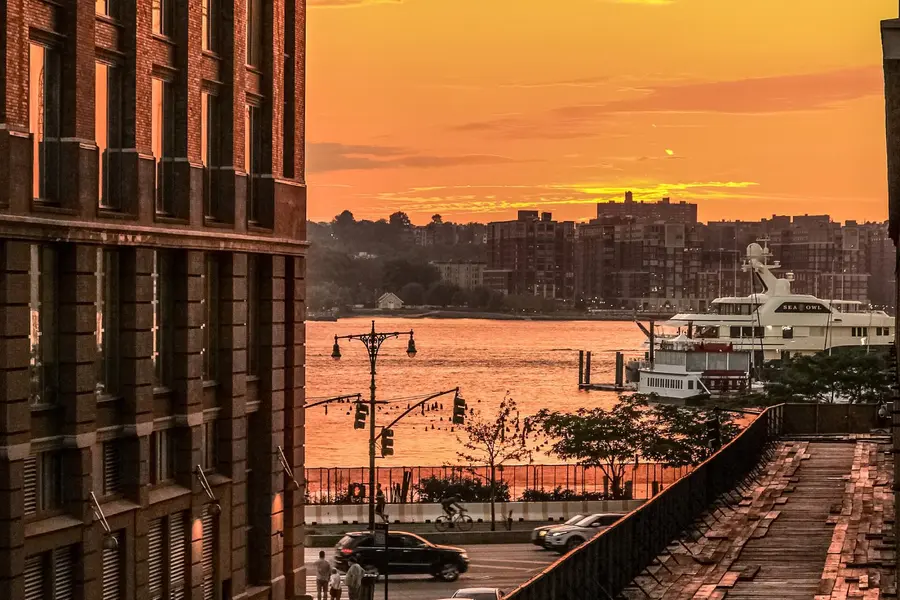
Standing 30 feet above the street, elevated above most Chelsea rooflines, the views are unlike anything at ground level. To the west, the Hudson River stretches out with the New Jersey Palisades beyond — on clear evenings, sunset from the High Line’s western side is one of the finest free spectacles in New York. To the east, the Manhattan skyline builds from Chelsea’s low-rise gallery district up toward the Midtown towers. Looking north from the Spur, the glass towers of Hudson Yards rise immediately around you, creating a striking contrast between old industrial infrastructure and 21st-century architecture.
Food and drink
The High Line’s food program, launched in 2011, is designed to be high-quality, sustainable, and walk-and-eat friendly. Most vendors operate May through October only; Shake Shack at the Gansevoort Street entrance is the year-round exception. A portion of every food purchase goes directly toward park maintenance. Chelsea Market, accessible via the stairs at 15th Street, is the best option for a full sit-down meal nearby.
|
Vendor |
Location |
What they serve |
Open |
|---|---|---|---|
|
Shake Shack |
Gansevoort St |
Burgers, shakes, beer, wine |
Year-round |
|
L’Arte Del Gelato |
15th Street |
Artisanal gelato and sorbetti |
May–Oct |
|
La Newyorkina |
15th Street |
Mexican-style paletas (frozen treats) |
May–Oct |
|
Doughnuttery |
15th Street |
Hot mini sugared doughnuts |
May–Oct |
|
Essex Squeeze |
15th Street |
Fresh-pressed juices |
May–Oct |
|
Brigs Ice Cream |
22nd Street |
Small-batch ice cream, sandwiches |
May–Oct |
|
The Berry Stop |
22nd Street |
Chocolate-dipped strawberries |
May–Oct |
Tips for visiting the High Line
Best time to visit
Fall (September–October) is arguably the best season: the plantings shift to warm amber and rust tones, the crowds thin out, the light softens, and temperatures are ideal for walking. Spring (April–May) is best for early blooms and birdwatching. Summer gives you the longest evenings — the park stays open until 10pm and hosts the most events. Winter is quieter and more intimate than you might expect; the horticulture team leaves the dried plant structures standing through the cold months, which gives the gardens an austere, sculptural quality.
How long does the High Line take, and avoiding crowds
A brisk end-to-end walk takes about 30 minutes. A casual stroll with photo stops takes 60–90 minutes. With the Bloomberg Connects audio tour and food vendor stops, plan for 2 hours or more. There is no time limit once you are inside. Weekends and sunny summer afternoons draw the biggest crowds. For a quieter experience, visit on a weekday morning before 11am — the park opens at 7am, and early mornings are genuinely peaceful.
Nearby attractions to combine
The High Line sits at the center of one of Manhattan’s richest corridors. Start at the Whitney Museum of American Art at the Gansevoort entrance, explore Chelsea Market for lunch (accessible via the 15th Street stairs), browse Chelsea’s gallery district on the streets below, then finish at Hudson Yards to see the Vessel, the Edge observation deck, and The Shed. The Moynihan Connector offers a scenic elevated walk east to Penn Station.
Park rules — what is not allowed
- No dogs (except service animals — dog urine damages the planting soil)
- No bicycles, skateboards, or scooters
- No smoking
- No outside food or alcohol in unauthorized areas
- Do not walk in planting beds or on exposed rail tracks
- No amplified sound without a permit
- Wheelchairs available to borrow in advance at thehighline.org (sponsored by Guardian)
What we could not verify
Three things, listed here rather than repeated as established fact.
- The current Plinth sculpture. Commissions rotate every 18 months and may have changed since this article was last reviewed. Check thehighline.org/art before your visit.
- Specific seasonal event schedules. The events calendar updates regularly. Confirmed events and RSVP links are at thehighline.org/events only.
- Individual food vendor hours. The official site lists vendor schedules, but hours can vary by week and weather. Shake Shack’s year-round status was confirmed against thehighline.org/eat-drink in October 2026.
Questions people ask
Every detail on this page was verified in October 2026 against the official High Line website, including its visitor info, FAQ, history, art program, gardens, and eat & drink pages. Historical context was cross-checked against Wikipedia and Encyclopaedia Britannica. Where the official site or third-party sources stated something ambiguously, those items are listed under “What we could not verify.”


